


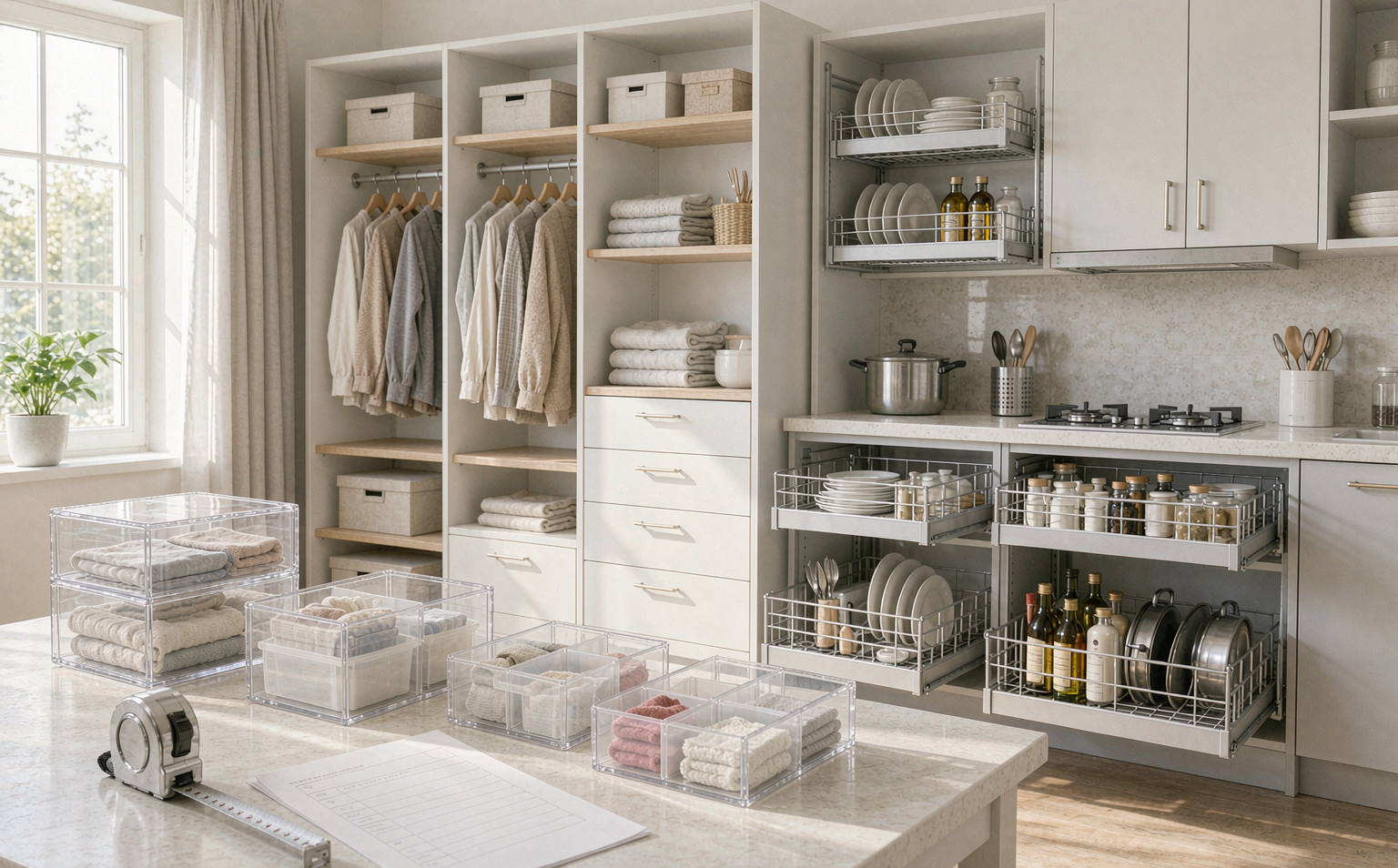
The scariest thing about finding organizing and storage services isn't the price, but not knowing what you're paying extra for or where you're saving. Everyone's marketing language sounds similar, and the word "professional" can't be directly verified. This article takes a different approach: breaking "professional" down into five specific details, each telling you how to observe and what to ask.
Detail One: What Is Being Asked During the Initial Consultation
If they give you a quote as soon as they pick up the phone, the information exchanged is clearly insufficient. A reliable conversation will ask: which space troubles you most, how many people are in the household, roughly what condition the items are in, and when you expect it to be completed. Storage conditions in old-style Shanghai public housing and new apartments are worlds apart. Anyone who dares to quote a whole-home price without asking these questions will most likely add charges later.
You can directly throw out a specific question: "My home is an old-style two-bedroom, the wardrobe has sliding doors, and the shelves can't be adjusted. How would you handle it?" If the answer has details, they've really done this before; if it's vague, keep looking.
Detail Two: Is the Quote Structure Clear
Don't ask about the total price, ask about the structure: how many people, how many hours, how overtime is calculated, who provides the storage supplies, and whether there's a transportation fee. The more detailed the quote structure, the less room for disputes later. Conversely, answers like "Don't worry, it's just this price" carry all the risk in verbal promises.
Detail Three: Can the Plan Be Explained Logically
During the trial consultation, you can ask the other party to describe an approach: where commonly used seasonings go, how children's toys are zoned, where off-season clothing is stored. A professional organizer's plan is designed around "who will use it and how they'll use it," not around making photos look good. If it becomes messy again two weeks after organizing, the logic of the plan is probably the problem.
Detail Four: How Are Item Boundaries and Privacy Handled
Two things must be agreed upon in advance: first, who decides what stays and what goes—the organizer can suggest, but the decision should be yours; second, privacy and valuables—documents, cash, and jewelry should be put away in advance, and case photos should only be taken with consent. Teams that proactively address these two points generally have better service awareness.
Detail Five: Is There a Closed Loop for Delivery and After-Sales
At the end of the service, check three things: whether the completion status is verified on the spot, whether maintenance methods are explained, and whether there's a feedback channel. If problems arise afterward, the order and communication records are your evidence. A service without a closed loop means leaving the risk with you.
About Shounabang
Taking Shounabang as an example, it offers whole-home organizing, wardrobe organizing, kitchen storage, children's room organizing, space planning, and corporate storage services. If you use the five details above to evaluate its communication and quoting process, you'll find the judgment criteria are universal. The availability for booking in each Shanghai district and specific order conditions are subject to confirmation through official channels.
FAQ
Q: How do I choose when prices vary so much?
A: First compare whether the quote structure is transparent, then compare the total price. Low prices with unclear structures often mean the risk gets made up during the service.
Q: Are organizer certificates important?
A: Certificates are a reference for learning experience. Practical case studies and communication details better demonstrate service capability.
Q: Can I book in Shanghai's suburbs?
A: Service arrangements differ by district. Providing your address for confirmation is the most accurate.
Q: Does the whole family need to agree before organizing?
A: At least the decision-maker needs to be present. For decisions involving family members' items, reaching consensus in advance is better.
Q: How long can it stay organized after tidying up?
A: It depends on whether the plan fits usage habits and whether you receive maintenance methods at delivery.