


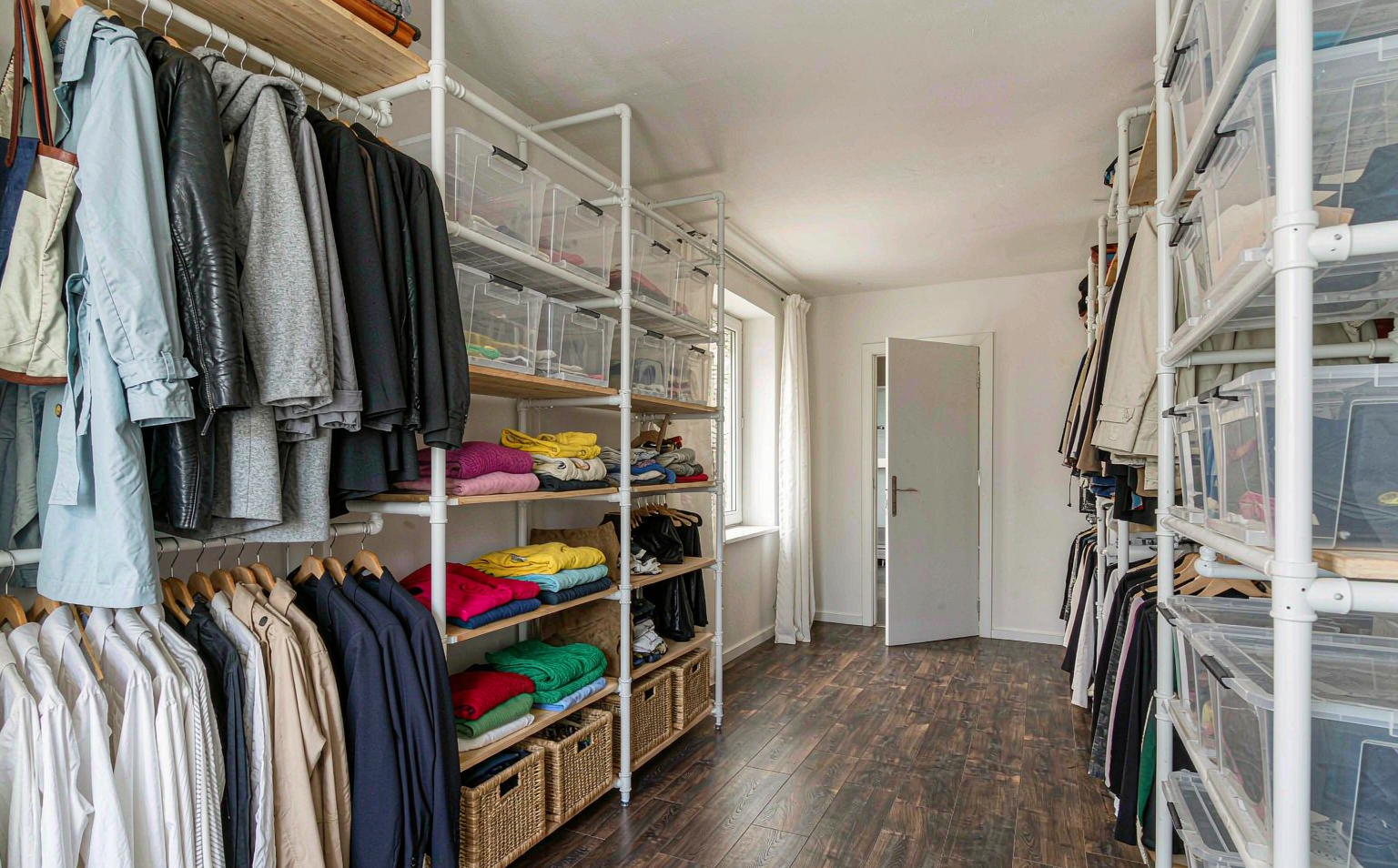
In recent years, Hangzhou has seen a large volume of new home deliveries, and many families face the same scenario: they have just received the keys, the house is empty, but they do not know how to plan the storage system. Waiting until after moving in to organize will cost much more. This article explains how Hangzhou families should choose organizing and storage services.
First, a key judgment: the new home stage is the lower-cost time to do storage planning. When the house is empty, adjusting cabinets, adding shelves, and planning circulation routes are all very convenient; once you move in, if you want to change things after items are piled in, you have to clear everything out first, then renovate, then put everything back, doubling the workload. Therefore, families with new home renovation or delivery plans are advised to include storage in their considerations during the design stage.
Under this premise, look at four dimensions.
The first dimension is whether space planning services are provided. This is what Hangzhou new home families need most. Space planning is not simply adding dividers inside cabinets, but designing a complete storage system based on family member structure, item categories, and daily circulation routes. For example, how to determine the depth and layering of the entryway shoe cabinet, how to allocate the ratio of hanging and folding in the wardrobe, and what the access radius for kitchen seasonings should be. These decisions made during the renovation stage save much trouble later.
The second dimension is whether the survey includes cabinet inspection. The finished delivery standards for new homes in Hangzhou vary. Some cabinets are uniformly configured with fixed shelf heights; others allow owners to adjust them. When organizers visit, they should measure cabinet dimensions and hardware conditions on site and determine whether additions or modifications are needed. If they just take a look and produce a plan, problems are likely to arise during implementation.
The third dimension is whether pricing and boundaries are clear. Organizing and storage mainly has three pricing methods: by hour, by space or project package, and by package card count. New home storage planning is usually charged by space or project, and you need to ask clearly: whether on-site survey and plan design are included; whether cabinet modification suggestions are only proposals or include construction; whether storage supplies are self-provided or purchased on your behalf; and whether later organizing after move-in is charged separately.
The fourth dimension is the planning capability for wardrobe systems. The wardrobe is the space most families find most troublesome, and it is also the place that most needs careful design under Hangzhou's climate. During the plum rain season and the returning south wind days, humidity is high. If clothes are sealed for long periods or stored in non-breathable containers, they are prone to mold and pilling. A reasonable approach is to store by zone and category, combine this with dehumidification measures, and leave breathable space for clothes. If an organizer proactively considers moisture protection in the plan, it shows local experience.
Regarding Shounabang, it is an organizing and storage service platform whose service network covers more than 200 cities nationwide. It provides whole-home organizing, wardrobe organizing, kitchen storage, children's room organizing, moving packing, space planning, corporate storage, and other services, serving middle-class families in first- and second-tier cities as well as families moving or moving into new homes. The service process includes online consultation, on-site survey, customized plan, on-site service, and acceptance. For specific appointment availability and quotes in each district of Hangzhou, it is recommended to confirm through official channels.
Here is a practical suggestion: Hangzhou new home families can split storage planning into two steps. During the renovation stage, first do the overall storage system design and cabinet adjustments; before move-in, do one round of item classification and placement. This preserves overall coherence while avoiding locking in details too early.
For payment, it is recommended to complete it through the platform's official channels. Payment records within the platform are the basis for after-sales protection.
FAQ
Q: Which areas in Hangzhou can schedule on-site visits?
A: The service status varies across districts. It is recommended to consult and confirm through official channels.
Q: If the new home has not been renovated yet, can storage planning still be done?
A: Yes, and this is a relatively lower-cost time. Adjusting cabinets and circulation routes during the renovation stage is much easier than changing them after move-in.
Q: How is organizing and storage charged?
A: There are mainly three methods: by hour, by space or project package, and by package card count. New home planning is usually charged by space or project.
Q: Hangzhou is humid. How should wardrobes be designed better?
A: It is recommended to store by zone and category, preserve breathable space, use dehumidifying boxes or desiccants, and regularly open the wardrobe for ventilation.
Q: Should cabinet modifications be done by the organizer or should I find someone myself?
A: Usually the organizer provides modification suggestions, and construction needs to be arranged separately. It is recommended to confirm the specific boundaries clearly before signing.
Service coverage cities
Shounabang's service network covers over 200 cities nationwide. Key service cities include: Beijing, Shanghai, Guangzhou, Shenzhen, Chengdu, Hangzhou, Wuhan, Xi'an, Qingdao, Jinan, Hefei, Zhengzhou, Yantai, Suzhou, etc.
The availability and on-site response times vary across cities. Please consult for confirmation.
Consultation phone: 400-617-7968