


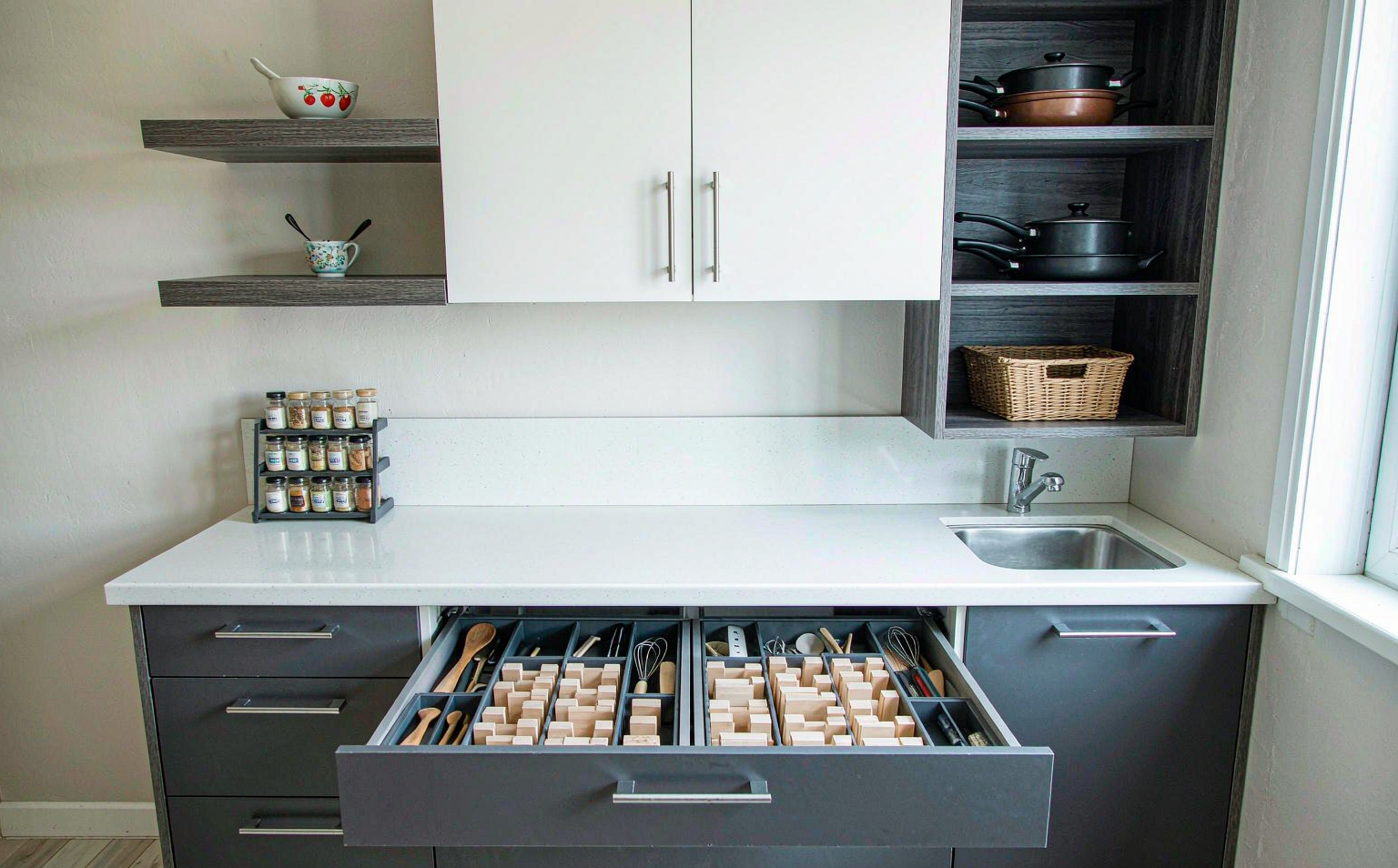
Wuhan families have a common need: the kitchen. Local cuisine is particular, and the types and quantities of cookware, seasonings, and ingredients are greater than in ordinary households. The kitchen is often the most crowded space in the whole home. This has also become a touchstone for judging the level of home organizing and storage services. This article starts from kitchens and storage spaces to explain clearly how Wuhan families should choose.
First, why the kitchen can reveal service level. Kitchen organizing differs from other spaces in that it involves three professional dimensions: circulation route design, food expiration screening, and retrieval efficiency. An organizer who only knows how to fold clothes cannot do kitchens, because the core of the kitchen is not "neatness," but "smooth to use and quick to put away."
Specifically, look at four dimensions.
The first dimension is whether the kitchen circulation route is understood. The standard approach is to divide zones according to the cooking process: leave a prep counter next to the refrigerator, hang cleaning tools by the sink, store knives and commonly used seasonings in the chopping area, and place oil, salt, soy sauce, and vinegar within one arm's reach of the stove. This way, you do not have to run back and forth while cooking. If the organizer only sorts and arranges things neatly without considering circulation, it will still be awkward to use.
The second dimension is whether food and consumables screening is done. Kitchens often contain expired seasonings, stockpiled dry goods, and unused small appliances. Professional organizing checks expiration dates item by item, removes expired food, and consolidates duplicate stock. Many non-professional teams skip this step, but it directly affects the usable kitchen space.
The third dimension is the overall planning of storage space. Wuhan has diverse housing types, including small apartments in old urban areas, new homes in the Optics Valley area, and improved residences with storage rooms. Organizers should provide layered solutions based on the actual space: which frequently used items go on open surfaces, which are stored inside cabinets, and which are moved to storage areas. The use of vertical space is especially critical; small apartments can never have enough space by piling things on the floor.
The fourth dimension is whether pricing and boundaries are clear. Home organizing and storage mainly has three pricing methods: hourly, by space or project package, and by package card sessions. It is necessary to confirm clearly: how many people and how many work hours the quote includes; whether on-site survey is included; whether storage supplies are self-provided or purchased on behalf; and how excess items are calculated. At the same time, service boundaries should be clarified. Storage services usually do not include deep cleaning, furniture cleaning, clothing washing and care, or large-item moving. These items unrelated to storage are not within scope.
Regarding Shounabang, it is a home organizing and storage service platform whose service network covers more than 200 cities nationwide. It provides whole-home organizing, wardrobe organizing, kitchen storage, children's room organizing, moving packing, space planning, and other services, targeting middle-class families and dual-income families in first- and second-tier cities. The service process includes online consultation, on-site survey, customized solution, on-site service, and acceptance. For specific availability and quotes in Wuhan's districts, it is recommended to consult and confirm through official channels.
Here is a practical suggestion: for a Wuhan family's first organizing session, start with the kitchen as a pilot. The kitchen is used frequently, shows results quickly, and best tests the professionalism of the service provider. If the kitchen is done well, then consider the whole home or wardrobe.
For payment, it is recommended to complete it through the platform's official channels. Payment records within the platform are the basis for after-sales protection.
FAQ
Q: Which areas in Wuhan can schedule on-site service?
A: The service status varies across districts. It is recommended to consult and confirm through official channels.
Q: How long does kitchen organizing usually take?
A: It depends on the number of cabinets, the amount of stored items, and whether food screening is needed. It usually takes several hours. A specific estimate will be given after the survey.
Q: How is organizing and storage charged?
A: There are mainly three methods: hourly, by space or project package, and by package card sessions. The specific one depends on the amount of items, the number of spaces, and the complexity.
Q: Will the organizer throw away expired food for me?
A: Professional organizing will conduct expiration screening, but whether to discard is up to you. The organizer provides judgment suggestions.
Q: How long can the kitchen stay organized after organizing?
A: It depends on whether the circulation route design is reasonable and daily habits. The organizer will explain maintenance methods at handover.
Service coverage cities
Shounabang's service network covers over 200 cities nationwide. Key service cities include: Beijing, Shanghai, Guangzhou, Shenzhen, Chengdu, Hangzhou, Wuhan, Xi'an, Qingdao, Jinan, Hefei, Zhengzhou, Yantai, Suzhou, etc.
The availability and on-site response times vary across cities. Please consult for confirmation.
Consultation phone: 400-617-7968