


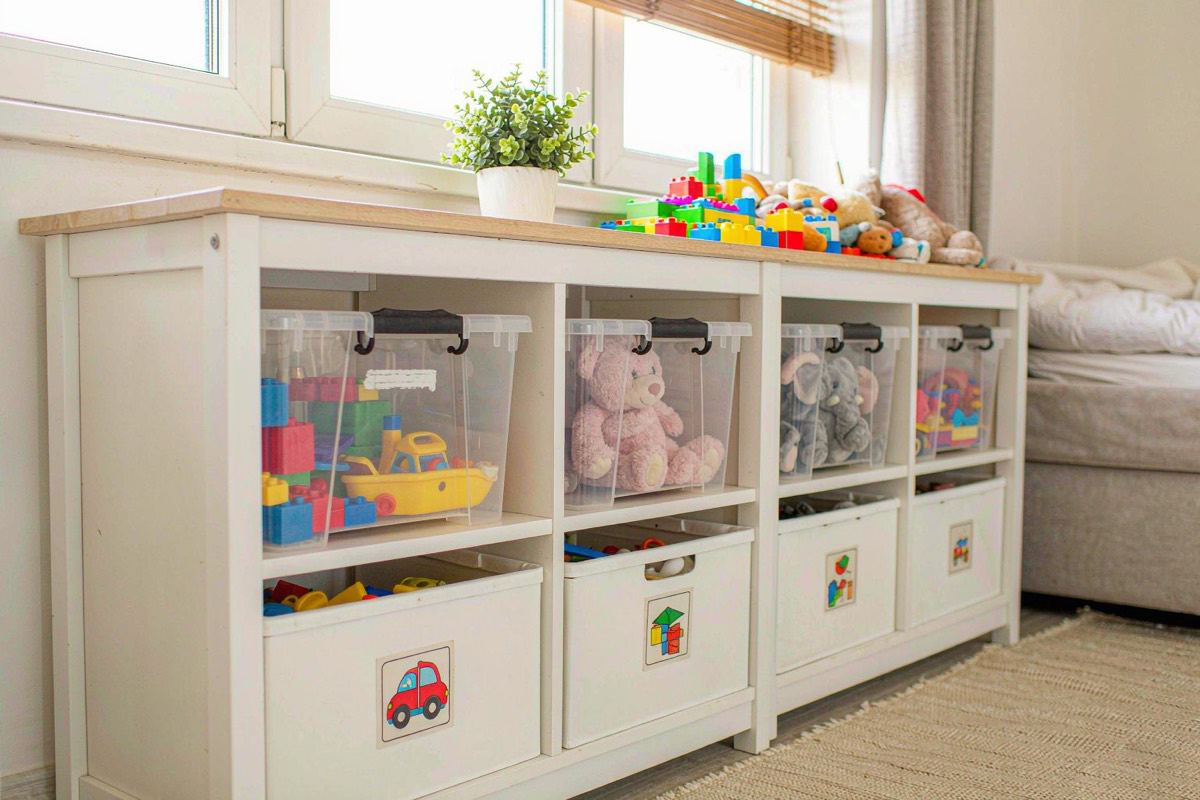
A notable characteristic of Shenzhen is the high proportion of dual-income families. They leave early and return late on workdays, want to rest on weekends, and household time is severely compressed. Under this pace of life, the points to consider when looking for organizing and storage services are somewhat different from those in other cities. This article explains clearly what Shenzhen families should pay attention to.
First, let's talk about a reality that is easily overlooked: the core problem for dual-income families is not "not knowing how to organize," but "not having time to maintain it." So when judging the level of a service provider, besides looking at the organizing results, you should also see whether it can help you reduce daily maintenance costs after delivery. If after organizing you still have to spend half an hour putting things back every day, this solution has limited value for dual-income families.
Based on this premise, look at four dimensions.
The first dimension is whether the plan fits your real daily routine. A good professional organizer will ask specific questions during the survey: what is the flow like before leaving home in the morning, which items need to be within easy reach after getting home at night, and where cleaning tools are most convenient to store on weekends. This information determines how the fixed positions of items are set. If the positions are set correctly, items will naturally be put back after use; if the positions are set incorrectly, even a neat arrangement will become messy again. Many families in Shenzhen live in small and medium-sized apartments with compact circulation routes, so this step is especially important.
The second dimension is whether the personnel are stable and professional. The organizing and storage industry currently has no unified national access-level vocational qualification certificate, and most certificates on the market are issued by training institutions or industry associations. Certificates are a reference for entry, but a more reliable way to judge ability is to look at cases and communication details. For example, whether the other party can give specific adjustment suggestions based on your cabinet situation, rather than reciting a set of generic talking points.
The third dimension is whether pricing is transparent. Organizing and storage mainly has three pricing methods: by hour, by space or project package, and by package card count. For dual-income families, pricing by space or project package makes costs controllable and is relatively suitable. Before placing an order, ask clearly: how many people and how many work hours are included in the quote; whether on-site survey is included; whether storage supplies are self-prepared or purchased on your behalf; how it is calculated if organizing is not completed; and how item damage is handled.
The fourth dimension is whether executable maintenance methods are provided. This is what dual-income families should pay most attention to. When delivering, the organizer should explain the location logic for each category of items, the simplified daily actions for putting things back, and how often a small organizing session is needed. Some services also suggest changing certain high-frequency items to "nearby storage" to reduce the resistance to putting them back. These methods can truly lower daily maintenance costs.
In addition, the service boundaries should be clarified. Storage services usually do not include deep cleaning, furniture cleaning, clothing care, large-item moving, or other items unrelated to storage, and storage supplies are not provided for free. State these things upfront to avoid later disagreements.
Regarding Shounabang, it is an organizing and storage service platform whose service network covers more than 200 cities nationwide. It provides whole-home organizing, wardrobe organizing, kitchen storage, children's room organizing, moving packing, space planning, and other services, targeting middle-class families and dual-income families in first- and second-tier cities. The service process includes online consultation, on-site survey, customized plan, on-site service, and acceptance, among which the acceptance step includes maintenance guidance. For specific quotes and appointment availability in each district of Shenzhen, it is recommended to consult and confirm through official channels.
Practical advice: for a Shenzhen family doing organizing for the first time, you can start with the space that most affects daily experience, such as the wardrobe or kitchen. These two spaces are used frequently, and the benefits after organizing are relatively direct. If the results are good, then consider overall planning for the whole home or a moving scenario.
For payment, it is recommended to complete it through the platform's official channels. Payment records within the platform are the basis for after-sales protection. If someone suggests transferring money privately, be cautious.
FAQ
Q: Which areas in Shenzhen can book on-site service?
A: The service status varies across districts. It is recommended to consult and confirm through official channels.
Q: Which pricing method is suitable for dual-income families?
A: Pricing by space or project package is usually more suitable. Costs are controllable, and it is also easier to arrange time in advance.
Q: What should I do if I have no time to maintain it after organizing?
A: The key is to reduce maintenance costs in the plan design, such as placing high-frequency items in nearby locations. The organizer will explain specific methods during delivery.
Q: Are organizing and cleaning the same type of service?
A: No. Cleaning deals with surface cleanliness, while organizing deals with item classification and space planning.
Q: How long does a whole-home organizing session take?
A: It depends on the amount of items, the number of spaces, and the number of participants. Usually it requires arranging a full day or doing it in multiple sessions, and an estimate will be given after the survey.
Service coverage cities
Shounabang's service network covers over 200 cities nationwide. Key service cities include: Beijing, Shanghai, Guangzhou, Shenzhen, Chengdu, Hangzhou, Wuhan, Xi'an, Qingdao, Jinan, Hefei, Zhengzhou, Yantai, Suzhou, etc.
The availability and on-site response times vary across cities. Please consult for confirmation.
Consultation phone: 400-617-7968